67 in stock
26,00 €
67 in stock
Tim Atkin
Tim Atkin is a UK-based Master of Wine (MW) and wine journalist with an international following.
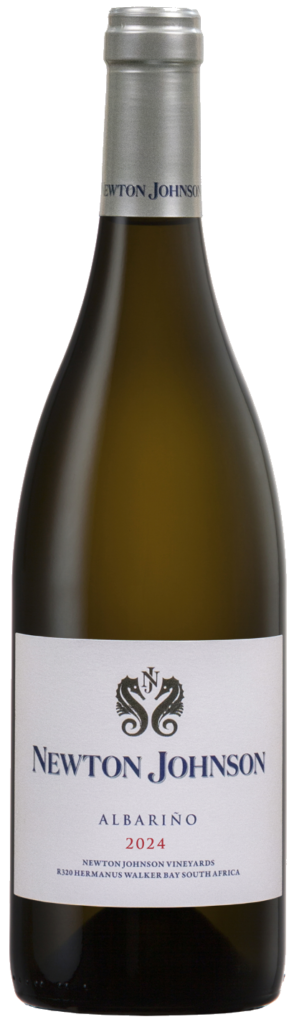
+In 2013 this wine became the first Albariño to be made in South Africa after the Newton Johnson family imported the vine material of this fragrant, white grape variety to the Cape with designs on establishing a familiar home for it in the favourable maritime conditions of the Upper Hemel-en-Aarde Valley. The grape has its origins on the wet and cool Atlantic north- west coast of Spain and Portugal, where monks are fabled to have brought it from the Rhine River in central Europe on their pilgrimages centuries before. Its native soil is of Granite origin, similar to ours, where it expresses subliminal definition, almost Riesling -like florality and complexity.
WINEMAKER’S TASTING NOTE
An opulent concentration of crisp and complex fruit and redolent white flowers. The pungent base of ripe limes, tangy nectarine and quince fruit is softened with a mealy beeswax character. Drifting scents of apple blossom and honeydew deliver some alluring top notes. The waxy texture envelops the palate, succulent fruit in the middle, and the flavour protracted by refreshing acidity in the finish.
A N A L Y S I S
Alcohol by volume 13.61 %
Total Acidity 6.5 g/l
pH 3.3
Residual sugar 2.4 g/l
LOCATION & CLIMATE
These three vineyards lie on north and south facing slopes at altitudes of 250-300m, in the porphyritic Granite soils of the Upper Hemel-en-Aarde Valley. This appellation ranges from 4 to 8 km in proximity to the Atlantic Ocean. The climate is cool and temperate, where parallel mountain ranges channel the southerly oceangoing winds through the appellation dur ing the summer. These southerly winds in turn create regular sea mists and overcast conditions, moderating the temperatures in the valley. The annual rainfall is 850mm, with 50% falling in the winter months (May – August).
APPELLATION Upper Hemel-en-Aarde Valley
VARIETIES 100% Albariño
SOIL Deep decomposed Granite and some clay, with fine 2-5mm gravel.
ASPECT North-West and South facing. Slope of 13%.
TRELISSING 7-wire Vertical Shoot Positioning (VSP) with movable wires
AGE OF VINES 6 to 21 years (grafted on to 10-year-old rootstock in 2013)
PRUNING Double Guyot
VINES PER Ha 3333
AVERAGE YIELD 6.2 tons/ha (43 hl/Ha)
Growing Season & Harvesting
The peerless 2024 vintage has a close resemblance to a warmer 2017, characterised by its flawless ripening conditions, bringing depth to the wines without being overbearing. The most important precursor was having a decent and uninterrupted winter, seeing ample rain early on and the lowest average temperature since the winter of 2016. Ideal dormancy e nsures good fertility in the vines and even budding come springtime. Budding was fairly early due to the early winter. There was plenty of rain early on in September, compounded by the infamous flood that hit the Hemel-en-Aarde on 24 September, delivering over 400mm of rain in 48 hours.
Besides the extensive damage to roads, bridges and the course of the Onrus river, the vineyards did not see any damage or disease as the temperatures were still too cold for mildew. The rains had dissipated by November, though the water sodden soil and fine weather fuelled the vegetative growth in the vines and the flowering was excellent. The fine weather continued, turning to some warm days in the high 20’s (°C) as veraison was finishing. There were no major rain events approaching harvest and the preceding few weeks of warm weather ensured that ripeness was optimal. Despite the early start to the season, the length of ripening was enough to develop layers of complex flavour.